
Kedarnath Helicopter Scams 2026: Fake IRCTC Portals & WhatsApp Frauds
The only legitimate way to book a Kedarnath helicopter ticket is through the official government portal: heliyatra.irctc.co.in. Any website, Facebook page, or WhatsApp agent offering “VIP quotas,” “instant confirmation,” or asking for payment via a personal UPI ID is a scam. If you are a victim, immediately call the national cybercrime helpline at 1930.
The desperation to secure a helicopter ticket for the Kedarnath Yatra has created a highly lucrative black market. Because official slots sell out within hours of opening, thousands of pilgrims turn to search engines and social media looking for agents, VIP quotas, or last-minute cancellations.
This guide breaks down exactly how cybercriminals clone government portals, trap you on WhatsApp, and how you can verify if the agent you are talking to is legitimate.
The Anatomy of the Fake IRCTC Portal Scam
The reason thousands of educated, digitally literate pilgrims lose their money every Yatra season is that these scams do not look like scams. Cybercriminals operating out of organized hubs run highly sophisticated, multi-layered operations designed to bypass your natural skepticism.
Here is exactly how the trap is built.
Domain Typosquatting (The Decoy)
The foundation of the scam relies on a technique called typosquatting. Fraudsters purchase website domain names that are visually almost identical to the official government portal. Because most users glance at a URL without reading every character, the deception works perfectly.
- The ONLY Official URL:
heliyatra.irctc.co.in - Known Fake URLs:
heliyatra-irctc.co.in(notice the hyphen replacing the dot),kedarnathheliservice.co,chardhamticketbooking.org, orofficial-booking.in.
If you do not see the exact .gov.in or .co.in structure of the official IRCTC subdomain, you are on a fraudulent site.
UI Cloning & Artificial Panic
Once you land on the fake URL, the criminals use UI (User Interface) cloning to put you at ease. They scrape the official IRCTC website, copying the exact color hex codes, government emblems, and “Approved Operator” badges.
To force you into a quick, irrational decision, they inject malicious JavaScript to display fake countdown timers (“Booking closing in 5 minutes!”) and artificial scarcity banners (“Only 2 seats left for your date!”). This emotional pressure prevents you from taking a moment to verify the URL.
The Trap & The “Agent” Pivot
The fake website is actually just a data-harvesting tool. When you enter your name, travel dates, and phone number to “check availability,” the site does not process a real booking.
Instead, within minutes, your phone will ring. The person on the other end will introduce themselves politely as an official IRCTC representative or a dispatch manager for an aviation company. They will use accurate, official-sounding aviation terminology to gain your trust. They will tell you that the seats are on hold, but to bypass the “server queue,” you must make the payment immediately via a direct link or UPI handle they are about to send you on WhatsApp. The moment you agree to move the conversation to WhatsApp, the trap closes.
The WhatsApp “VIP Quota” & Social Media Fraud
While fake websites wait for you to make a mistake, social media scams actively hunt for desperate pilgrims. During the peak Yatra season, when the official IRCTC portal shows “Sold Out” for weeks, panic sets in. Cybercriminals capitalize on this desperation using targeted advertisements and direct messaging.
The “Sponsored” Ad Trap
If you search for terms like “Kedarnath helicopter booking 2026” on Google, or browse Instagram and Facebook, you will inevitably see posts labeled as Sponsored. Fraudsters pay heavy advertising fees to place their fake travel agencies at the top of your feed. These ads usually feature high-quality drone footage of the Kedarnath temple overlaid with text promising “Instant Confirmation” or “Last-Minute Seats Available.” Clicking a sponsored ad for a helicopter ticket during peak season is incredibly risky.
The WhatsApp API Pivot
When you click one of these ads, you are rarely taken to a website. Instead, the link uses an API pivot to instantly open a WhatsApp chat on your phone.
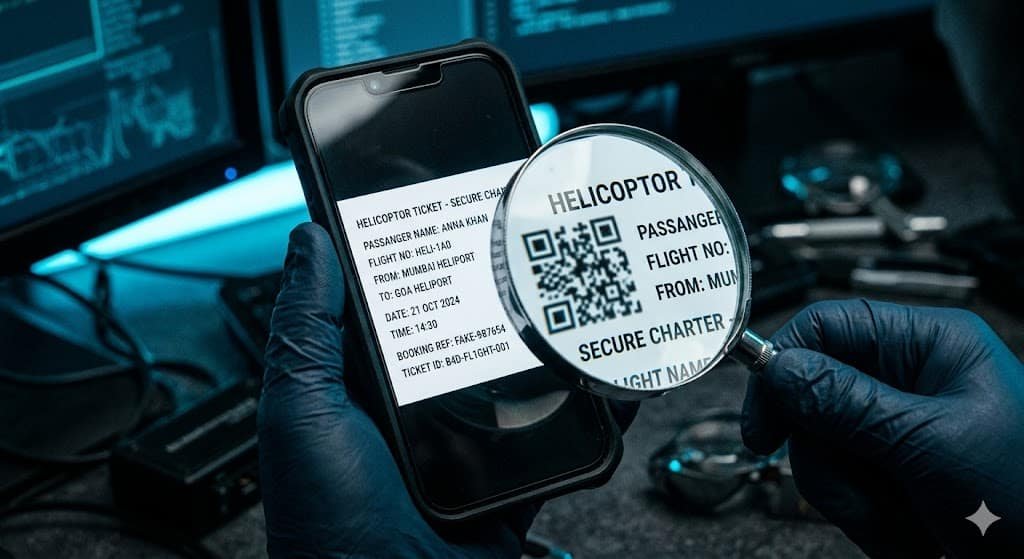
The account you are messaging will look highly professional. It will be a registered WhatsApp Business account, complete with an official aviation logo, a catalog of services, and a fake GST number in the bio. They will ask for your Aadhaar details and within minutes, send you a completely forged PDF ticket. These fake PDFs are meticulously crafted—they feature copied IRCTC branding, correct flight times, and even realistic-looking QR codes. However, if you scan that QR code, it usually leads to a dead link or a generic text string, not the official government database.
The “VIP Darshan” Lie
The most common question victims ask these scammers is: “How do you have seats when the official government site is fully booked?”
The scammers have a rehearsed, psychological hook ready. They will claim they have access to an exclusive “VIP Quota,” an “Emergency Cancellation Quota,” or that they are selling a bundled “VIP Darshan + Heli” package reserved for dignitaries.
The Ground Reality: There is absolutely no “secret quota.” Under the strict regulations, no private agent, travel company, or hotel holds a reserve of Kedarnath helicopter tickets. Every single ticket is mapped directly to a pilgrim’s Aadhaar and Tourist Safety Management System (TSMS) registration. If someone claims they can bypass the IRCTC sold-out calendar via a VIP package on WhatsApp, it is a guaranteed scam.
Five Technical Red Flags to Verify Before Paying
If you are currently communicating with an “agent” and are about to transfer money, stop and run their profile through this technical checklist.
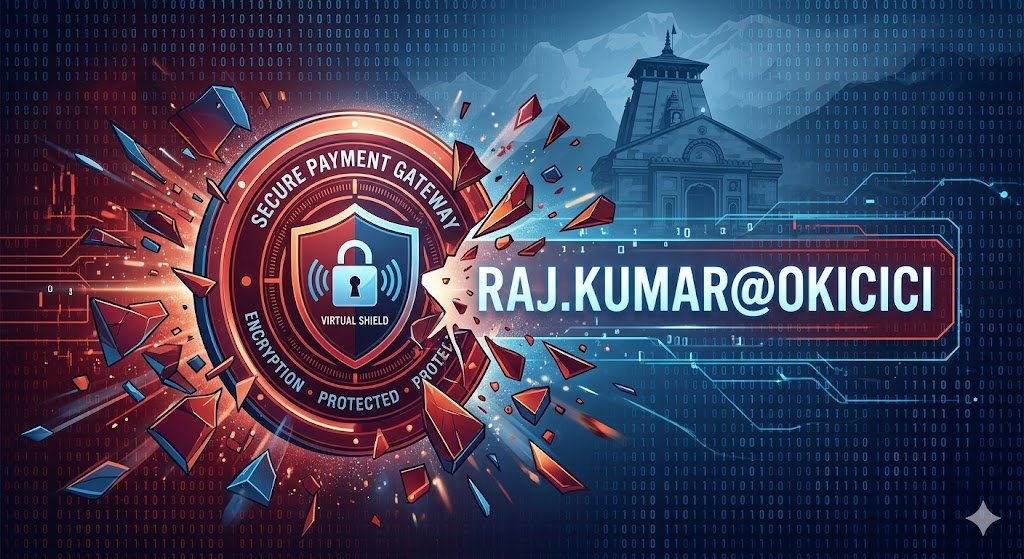
- Personal UPI Requests (The Ultimate Red Flag): Real aviation companies and IRCTC use secure merchant payment gateways. If an agent asks you to send money to an individual’s Google Pay, PhonePe, or a personal UPI handle (e.g.,
rahulkumar@ybl), it is an immediate scam. - Missing or Fake GSTIN: Instruct the agent to provide their official GSTIN. Do not just look at the number—verify it instantly at
services.gst.gov.in. Scammers rarely possess valid, matching business registrations. - Recent Domain Age: Use a tool like
who.isto check the age of their website domain. If a domain claiming to belong to a “leading helicopter operator” was registered just two weeks ago, it is fraudulent. - Grammar and Broken Links: Analyze the forged PDF ticket. Fake tickets frequently feature spelling errors in the temple names (e.g., “Kerdarnath”) or broken hyperlink formatting in the terms and conditions.
- Refusal to Video Call: Legitimate travel operators with physical offices will happily agree to a quick video call. Scammers operating out of remote cyber hubs will relentlessly refuse, citing “poor network” or “company policy.”
The 2026 Protocol: What to Do If You’ve Already Been Scammed
The Uttarakhand Special Task Force (STF) and state cybercrime units are actively cracking down under “Operation Heli.” Recently, they blocked over 142 fraudulent websites, 117 mobile numbers, and froze dozens of mule bank accounts. However, the criminals move funds rapidly across state lines, making recovery difficult if you delay.
If you have already transferred money to a fraudulent agent, you must act within the “Golden Hour”:
1.Call the National Helpline:Action required within minutes.
Dial 1930 immediately. This is the National Cyber Crime Reporting Helpline. The faster you report the fraudulent UPI handle or bank account, the higher the probability that authorities can freeze the mule account before the money is withdrawn.
2.File an NCCRP Report:Document the crime officially.
Lodge a formal, detailed complaint at the National Cyber Crime Reporting Portal (cybercrime.gov.in). You will need to upload all evidence here.
3.Preserve Digital Evidence:Prevent evidence deletion.
Take immediate screenshots of the fake tickets, the complete WhatsApp chat history, the agent’s profile page, and the UPI payment transaction IDs. Scammers will block you and delete their messages once they realize you know it is a trap.
Conclusion & The Safe Booking Method
The desperation to secure a helicopter ticket is exactly what cybercriminals prey upon. If you miss the official booking slot, you must either trek, wait for cancellations on the official portal, or pivot your itinerary. Do not trust an unverified agent promising miracles.
To ensure your money and your pilgrimage remain safe, follow our step-by-step Kedarnath Helicopter Booking Guide, which walks you through the exact process on the genuine IRCTC portal. If you decide to skip the helicopter entirely, read our guide on Senior Citizen Friendly Hotels in Gaurikund to prepare for the trek safely.