Top 7 Famous Sweets of Uttarakhand: A Dessert Lover’s Guide (With Recipes)
Quick Summary: What is the Famous Sweet of Uttarakhand?
Bal Mithai is widely recognized as the official state sweet of Uttarakhand. Originating from Almora in the Kumaon region, this dark brown fudge is made by slow-roasting khoya (reduced milk solids) until caramelized, then coating it with crunchy white sugar balls. Other iconic sweets include Singodi, Arsa, and Jhangora Ki Kheer.
| Sweet Name | Region of Origin | Main Ingredients | Shelf Life | Flavor Profile & Texture |
| Bal Mithai | Kumaon (Almora) | Roasted Khoya, Sugar Balls | 7–10 Days | Fudgy, caramel-like, with a crunchy exterior |
| Singodi | Kumaon & Tehri | Khoya, Sugar, Cardamom, Malu Leaf | 3–5 Days | Milky, aromatic, with an earthy leaf scent |
| Arsa | Garhwal | Rice Flour, Jaggery (Gud), Mustard Oil | 15–30 Days | Chewy inside, crispy crust, rich jaggery flavor |
| Jhangora Kheer | Garhwal / Kumaon | Barnyard Millet (Jhangora), Milk, Nuts | 1 Day | Creamy, light, naturally gluten-free |
| Roat / Rotana | Garhwal | Wheat Flour, Jaggery, Milk, Fennel | 7–10 Days | Thick, sweet, crispy fried flatbread |
| Singhal | Kumaon | Semolina (Sooji), Curd, Banana, Sugar | 5–7 Days | Soft, spongy spiral fritter |
Uttarakhand is famous for its stunning Himalayan treks and spiritual shrines, but its culinary heritage is equally rich. The famous sweets of Uttarakhand are deeply rooted in mountain culture, relying on local ingredients like pure ghee, jaggery (gur), millets, and roasted khoya rather than refined sugars.
Whether you are exploring the Kumaon hills, embarking on one of the classic 2-3 days short treks in Uttarakhand, or attending a Garhwali wedding, here are the top 7 traditional sweets you must try—along with instructions on how to make them at home!
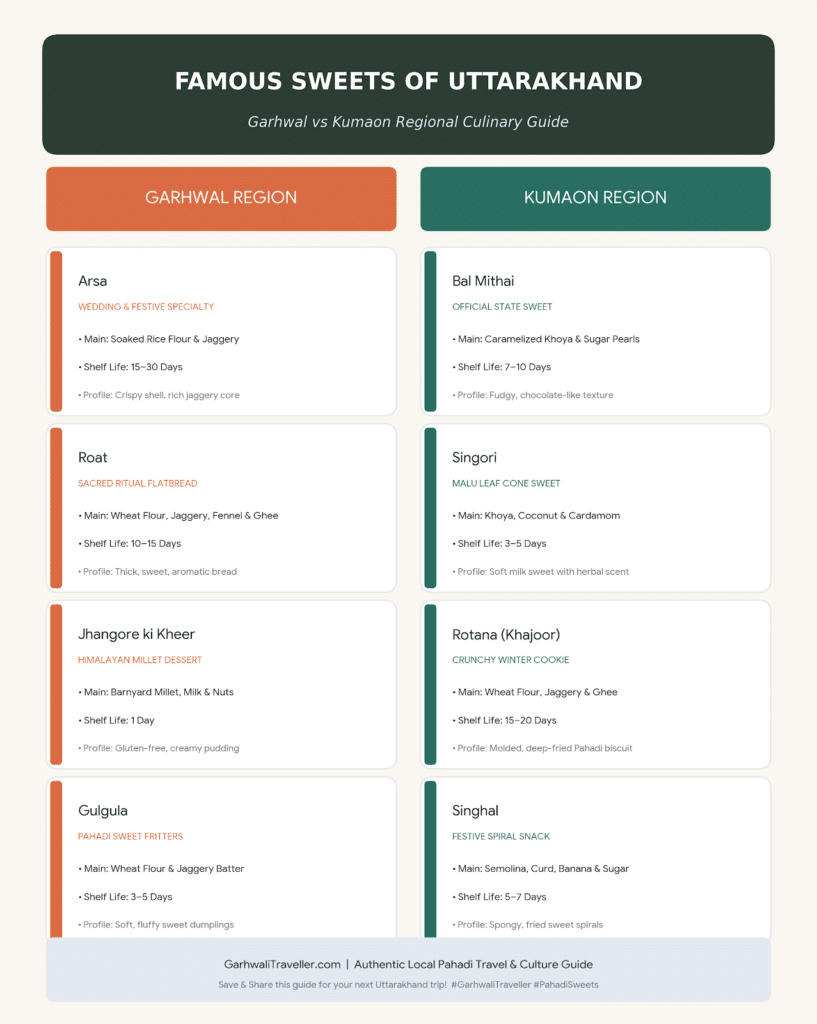
Share This Infographic On Your Site!
1 – Bal Mithai – The Chocolate of the Hills
Bal Mithai is Uttarakhand’s most famous sweet, created over a century ago in Almora. Made from slow-cooked, caramelized mawa (khoya) and coated in tiny sugar pearls (misri dana), it offers a rich caramel flavor similar to dense chocolate fudge.
- The Flavor Profile: The magic of Bal Mithai lies in the slow, deliberate caramelization of khoya (reduced milk solids) and cane sugar. It is roasted over a low flame until it takes on a deep brown, toffee-like flavor.
- The Visual Appeal: What makes it instantly recognizable is its coating. The dark roasted blocks are rolled in tiny, crunchy white sugar balls (traditionally known as khas-khas or dana), creating a beautiful textural contrast between the crunchy exterior and the soft, melting interior.
- Cultural Significance: No trip to the Kumaon region is complete without bringing home a box from the heritage sweet shops of Almora. It is the ultimate gesture of goodwill, gifted during Diwali, weddings, and family reunions.
How to Make Bal Mithai at Home
The secret to authentic Bal Mithai lies in the slow roasting of the khoya. It requires patience, but the fudgy, caramelized result is worth it.
- Prep time: 10 mins | Cook time: 45 mins | Yield: 15-20 pieces
- Ingredients: 500g Khoya (Mawa), 200g Sugar (for the khoya), 2 tbsp Ghee, 1/2 cup Sugar (for the syrup), 1/4 cup White poppy seeds (Khas Khas) or tiny white sugar balls (Dana).
- Instructions:
- Heat ghee in a heavy-bottomed pan. Add the khoya and roast it on low heat continuously until it turns a dark, rich, chocolate-brown color.
- Once dark brown, add the 200g of sugar and continue stirring until the mixture leaves the sides of the pan and becomes fudge-like.
- Pour the hot mixture into a greased tray, spread it evenly, and let it cool completely. Once set, cut it into rectangular blocks.
- Prepare a thick sugar syrup. Dip the pieces into the syrup lightly and immediately roll them in the white sugar balls so they stick to the outside.
2 – Singodi – The Leaf-Wrapped Kumaoni Delicacy
Singodi is a traditional Kumaoni sweet made from condensed milk (khoya) flavored with cardamom and toasted nuts. It is shaped into cones and wrapped in fresh Malu leaves (Bauhinia vahlii), which naturally preserve the sweet while infusing an earthy herbal aroma.
Why it Matters: In Kumaoni culture, serving Singori is a mark of authentic hospitality. Because the leaf acts as a natural preservative, it is a favorite treat to carry on long journeys across the hills.
The Maalu Leaf Secret: What elevates Singori from a simple milk sweet to a culinary masterpiece is its packaging. The sweet is molded into a small cone and tightly wrapped in a fresh, green Maalu leaf (Bauhinia variegata).
The Sensory Experience: The leaf is not edible, but as the warm sweet cools inside it, the Maalu leaf infuses the khoya with a subtle, earthy, and slightly peppery fragrance that you simply cannot replicate in a modern kitchen.
How to Make Singori (Singauri)
This is one of the quickest traditional sweets to prepare, provided you can source the fresh leaves for wrapping.
- Prep time: 15 mins | Cook time: 15 mins | Yield: 10-12 pieces
- Ingredients: 250g Khoya (Mawa), 100g Freshly grated coconut, 100g Powdered sugar, Fresh Maalu leaves (Banana or Sal leaves work as an alternative).
- Instructions:
- In a pan, lightly roast the khoya on low heat for 5-7 minutes. Add the sugar and grated coconut. Stir until the sugar melts and the mixture comes together. Let it cool slightly.
- Wash the fresh leaves and fold them into small, tight cones.
- Stuff the warm coconut-khoya mixture tightly into the leaf cones.
- Allow them to set at room temperature. The sweet will absorb the earthy fragrance of the leaf as it cools.
3 – Arsa – Garhwal’s 1,000-Year-Old Festive Sweet
Arsa is an ancient Garhwali dessert prepared during weddings, harvest festivals, and religious rituals. Made with soaked rice flour and jaggery syrup fried in mustard oil, Arsa has a long shelf life of up to 30 days, making it a traditional return gift (Kaleo) for family guests.
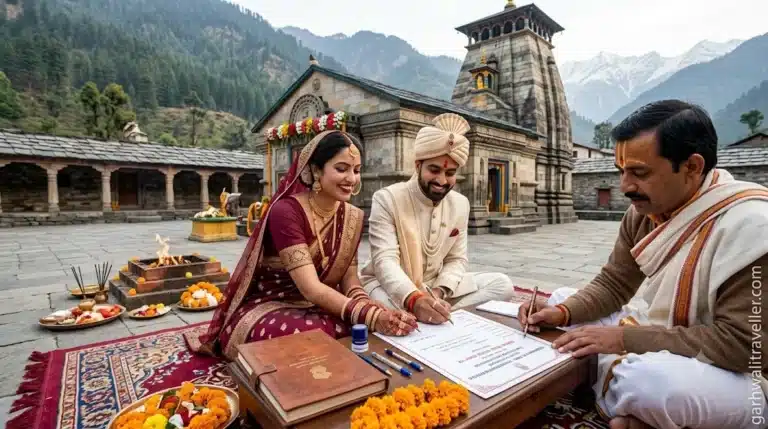
The Wedding Tradition: You cannot attend a Pahadi wedding without encountering Arsa. It is a vital part of the Kaleo (a traditional return gift) given to the groom’s family by the bride’s parents during her bidaai (farewell). It symbolizes prosperity, sweetness, and the blessing of a new beginning.
The Flavor Profile: Made from just three ingredients—soaked rice flour, rich local jaggery, and mustard oil or pure desi ghee—Arsa is a masterclass in rustic cooking. Deep-frying the jaggery-infused dough in mustard oil gives it a distinct, slightly smoky flavor with a crisp outer shell and a soft, chewy center.
How to Make Traditional Garhwali Arsa
- Prep time: 12 hours (includes soaking) | Cook time: 20 mins | Yield: 15-20 pieces
- Ingredients: 2 Cups Rice, 1.5 Cups Jaggery (crushed), 1/2 Cup Water, Mustard oil or Ghee (for deep frying), Optional: 1 tsp Fennel seeds (Saunf) or chopped dry coconut.
- Instructions:
- Wash the rice and soak it in water for 10 to 12 hours.
- Drain the water, spread the rice on a clean cotton cloth, and let it air dry in the shade. Once dry, grind the rice into a fine powder.
- In a heavy-bottomed pan, heat the water and add the crushed jaggery. Boil until it reaches a one-string consistency.
- Slowly mix the rice flour into the hot jaggery syrup, stirring continuously. Add fennel seeds or coconut. Let the mixture cool down until it forms a soft dough.
- Heat mustard oil or ghee in a deep kadhai. Take small portions of the dough, flatten them into small thick discs, and slide them into the hot oil on medium heat.
- Fry until they turn a deep, rich brown on both sides. Drain and cool.
4 – Jhangora Ki Kheer – Healthy Himalayan Millet Pudding
Jhangora Ki Kheer is a wholesome dessert made from local Himalayan barnyard millet (Jhangora) slow-cooked in sweetened milk, cardamom, and dry fruits. It is gluten-free, highly nutritious, and commonly served as sacred prasad during festivals.
- The Flavor Profile: Jhangore ki Kheer is a creamy, slow-cooked pudding. The tiny millet grains absorb the rich, cardamom-infused milk, creating a texture that is lighter and more delicate than traditional rice kheer.
- The Health & Heritage Angle: Because Jhangora is naturally gluten-free, easily digestible, and highly energetic, this dessert is considered exceptionally pure. It is heavily favored as an offering during local pujas and is the preferred sweet to break rigorous religious fasts.
How to Make Jhangore ki Kheer
- Prep time: 30 mins | Cook time: 40 mins | Yield: 4 servings
- Ingredients: 1/2 Cup Jhangora (Barnyard Millet), 1 Liter Full-fat Milk, 1/2 Cup Sugar or Jaggery powder, 1 tsp Cardamom powder, 2 tbsp Chopped dry fruits.
- Instructions:
- Wash the Jhangora thoroughly and soak it in water for 30 minutes.
- In a heavy-bottomed pot, bring the milk to a boil. Drain the soaked Jhangora and add it to the boiling milk.
- Reduce the heat to low. Let the millet cook in the milk, stirring frequently, until the milk thickens and the millet is completely soft (about 25-30 minutes).
- Add the sugar and cardamom powder. Stir well for another 5 minutes. Garnish with chopped nuts before serving.
5 – Roat (Rotana) – Sacred Garhwali Sweet Flatbread
Roat (or Rotana) is a thick, sweet fried flatbread crafted from whole wheat flour, jaggery syrup, milk, and fennel seeds (saunf). Deeply tied to Garhwali traditions, Roat is offered to Lord Hanuman and local deities during auspicious religious ceremonies and family celebrations.
Cultural Significance: Roat is intrinsically linked to faith. It is frequently prepared as a sacred prasad (offering) for Lord Hanuman and the Sun God. Beyond religion, it holds nostalgic value; mothers traditionally pack a large batch of Roat for their daughters when they leave for their Sasural (in-laws’ house), as its low moisture content allows it to stay fresh for weeks.
The Flavor Profile: Made from whole wheat flour, coarse jaggery, milk, and generous amounts of pure ghee, Roat is distinctly flavored with crushed fennel seeds (saunf) and cardamom. It is traditionally cooked on a heavy iron griddle (tawa) over a wood fire, giving it a beautiful, crisp, biscuit-like crust while remaining dense and soft inside.
How to Make Garhwali Roat
- Prep time: 15 mins | Cook time: 20 mins | Yield: 6-8 thick flatbreads
- Ingredients: 2 Cups Whole Wheat Flour, 1 Cup Jaggery (crushed), 1/2 Cup Water, 1/4 Cup Cold Milk, 3 tbsp Ghee (plus extra for cooking), 1 tsp Fennel seeds (Saunf), 1/2 tsp Cardamom powder.
- Instructions:
- Dissolve the crushed jaggery in warm water to make a syrup. Strain and let it cool.
- In a large bowl, mix the wheat flour, ghee, fennel seeds, and cardamom powder. Rub the ghee into the flour. Mix in the cold milk.
- Gradually add the jaggery syrup to knead a stiff, firm dough. Let it rest for 10 minutes.
- Divide the dough into balls and roll them out into thick discs. Heat a tawa on low-medium heat. Cook the Roat on both sides, applying generous amounts of ghee until crisp and dark brown spots appear.
6 – Gulgula – Pahadi Jaggery & Fennel Sweet Dumplings
Gulgula is a beloved bite-sized sweet dumpling popular across rural Garhwal and Kumaon. Prepared by deep-frying a simple batter of wheat flour, jaggery (gud), and aromatic fennel seeds, these sweet fritters are crispy on the outside, fluffy on the inside, and commonly enjoyed warm with evening tea.
If you are taking a road trip or embarking on one of the 2-3 days short treks in Uttarakhand, Gulgula is the sweet that will keep your spirits high. It is the quintessential, unpretentious roadside snack of the Garhwal region.
The Experience: It is not a fancy dessert served on fine china; it is comfort food meant to be eaten out of a paper cone. Pairing a plate of piping-hot Gulgulas with a steaming glass of ginger-infused Pahadi chai at a mountain tea stall is an experience every traveler must have.
The Flavor Profile: Resembling a rustic, mini-doughnut, Gulgula is made by dropping a thick batter of wheat flour and jaggery into hot oil. The result is a delightfully fluffy, spongy interior encased in a caramelized, golden-brown crust.
How to Make Pahadi Gulgula
- Prep time: 15 mins | Cook time: 15 mins | Yield: 15-20 fritters
- Ingredients: 1 Cup Whole Wheat Flour, 1/2 Cup Jaggery (crushed), 1/2 tsp Fennel seeds, A pinch of baking soda, Water (as needed), Mustard oil or Ghee.
- Instructions:
- Dissolve the jaggery in about 1/2 cup of warm water to make a syrup. Strain it and let it cool.
- In a bowl, add the wheat flour and fennel seeds. Gradually pour in the jaggery syrup, whisking continuously to form a thick, lump-free batter. Let it rest for 10 minutes. Add a pinch of baking soda and mix well.
- Heat oil in a deep kadhai on medium heat. Drop small spoonfuls of the batter into the hot oil.
- Fry until the Gulgulas puff up and turn dark golden brown all over. Drain on a paper towel and serve hot.
7. Rotana (Khajoor)
Rotana (locally known as Khajoor) is a traditional crunchy Pahadi sweet snack especially popular during winter and festivals like Makar Sankranti. Made with wheat flour, jaggery, milk, and ghee, the dough is shaped using decorative wooden molds (sancha) and deep-fried into crispy, cookie-like bites.
The Aesthetic: Women in the villages often press beautiful, intricate designs into the dough using wooden stencils or forks before frying them. Because they harden as they cool, they have a fantastic crunch, making them the perfect, long-lasting winter snack to munch on while sitting around a bukhari (traditional wood heater).
The Flavor Profile: These are essentially traditional, deep-fried cookies. The dough is made exceptionally stiff by combining wheat flour, melted ghee, jaggery syrup, and often a touch of semolina (suji) or grated coconut for extra crunch.
How to Make Rotana (Khajoor)
- Prep time: 15 mins | Cook time: 20 mins | Yield: 15-20 cookies
- Ingredients: 2 Cups Whole Wheat Flour, 2 tbsp Semolina (Suji), 1 Cup Jaggery (crushed), 3 tbsp Ghee (melted), 1 tsp Fennel seeds, 1/2 tsp Cardamom powder, 1/4 Cup Milk, Ghee or Oil (for frying).
- Instructions:
- Dissolve the jaggery in a little warm water, strain, and let it cool.
- Mix the wheat flour, semolina, fennel seeds, cardamom, and melted ghee in a large bowl.
- Add the milk and slowly pour in the jaggery syrup to form a very stiff dough.
- Pinch off small portions of the dough and roll them into thick oval or diamond shapes. Deep fry on low-medium heat until dark golden brown. They will harden into crispy cookies as they cool.
Frequently Asked Questions
What is the most famous sweet of Uttarakhand?
Bal Mithai is widely considered the most famous sweet of Uttarakhand. Originating from Almora, it is a roasted khoya dessert coated in crunchy white sugar balls, often referred to as the “Chocolate of the Himalayas.”
Which sweet is famous in Garhwal?
Singori (a khoya sweet wrapped in a Maalu leaf) and Arsa (a rice and jaggery sweet) are among the most famous traditional sweets in the Garhwal region, particularly prepared during weddings and religious festivals.
Are Uttarakhand sweets healthy?
Many traditional Uttarakhand sweets like Jhangore ki Kheer and Roat are relatively healthy as they utilize nutrient-rich millets, whole wheat, pure ghee, and natural sweeteners like jaggery instead of refined white sugar.
*** Ready to explore more of Uttarakhand’s hidden gems? Check out our guide to the serene Nauti Village or explore the places to visit in Gauchar to plan your next offbeat Himalayan escape.