Mini Switzerlands of India vs. The Actual Swiss Alps: A Visual Guide
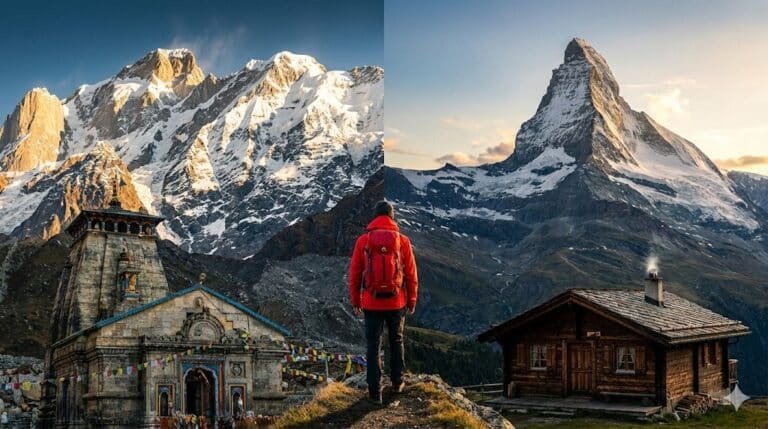
India is blessed with the towering majesty of the Himalayas. Over the decades, as travelers discovered pristine alpine meadows and snow-draped pine forests across Himachal, Uttarakhand, and Kashmir, several breathtaking hill stations earned a legendary moniker: “The Mini Switzerland of India.”
But how accurate is that comparison, really?
As mountain lovers who have extensively mapped the remote corners of the Garhwal Himalayas, we are putting India’s beloved “Mini Switzerlands” head-to-head with the actual Swiss Alps. Whether you are deciding to explore locally or finally book that flight to Europe, here is the ultimate visual and logistical comparison of landscapes, ski slopes, and travel costs.
The “Official” Mini Switzerland: Khajjiar vs. Grindelwald
If you search for the Mini Switzerland of India, Khajjiar is the name that pops up first.
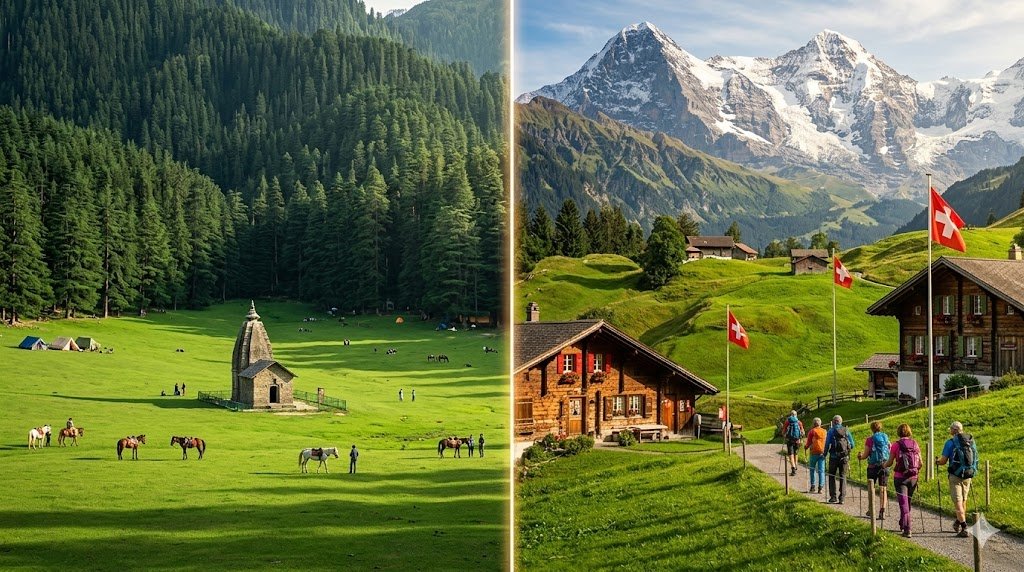
- The Indian Side (Khajjiar, Himachal Pradesh): Khajjiar isn’t just a nickname; it is official. In 1992, the Swiss Envoy Willy T. Blazer officially christened this saucer-shaped meadow the “Mini Switzerland of India,” and even took a stone from Khajjiar to place outside the Swiss Parliament in Bern. Ringed by dense deodar forests with a small lake in the center, it is a pastoral dream.
- The Swiss Counterpart (Grindelwald): Khajjiar’s closest European relative is Grindelwald in the Jungfrau region. Both feature that striking contrast of flat, vibrant green pastures abruptly meeting dark, forested slopes.
- The Verdict: Khajjiar offers the exact same serene, green-pasture aesthetic at a fraction of the cost. However, Grindelwald wins on sheer vertical, glacial scale, as it sits directly beneath the massive North Face of the Eiger.
The Ski Capitals: Auli vs. Zermatt
When winter hits, the comparison shifts from green meadows to white-out adrenaline.
- The Indian Side (Auli, Uttarakhand): Offering jaw-dropping, unobstructed views of the Nanda Devi peak, Auli is India’s premier ski destination. Boasting pristine powder snow and Asia’s longest cable car ropeway, it is a haven for winter sports. If you are planning a trip, mapping out your Auli skiing costs reveals just how accessible world-class powder can be.
- The Swiss Counterpart (Zermatt): Auli’s spiritual sibling is Zermatt, home to the iconic Matterhorn and the highest ski resort in Europe (Matterhorn Glacier Paradise).
- The Verdict: Auli is the rugged, raw, and highly affordable version of alpine skiing. Zermatt is for those who want world-class luxury infrastructure, flawless groomers, and massive, interconnected ski domains.
The Tranquil Meadows: Chopta vs. Lauterbrunnen
Sometimes, you don’t want ski lifts; you just want silence.
- The Indian Side (Chopta, Uttarakhand): Widely known as the “Mini Switzerland of Uttarakhand,” Chopta serves as the base camp for the famous Tungnath trek. Unlike highly commercialized hill stations, Chopta retains its raw, off-the-grid magic. Trekking through the sprawling Bugyals of Uttarakhand around Chopta feels like stepping back in time.
- The Swiss Counterpart (Lauterbrunnen): Chopta’s serenity mirrors Lauterbrunnen, the famous “Valley of 72 Waterfalls.” Both destinations offer a profound sense of isolation, towering rock faces, and pristine, unpolluted alpine air.
The Winter Wonderlands: Baisaran Valley vs. St. Moritz
- The Indian Side (Baisaran, Kashmir): Located just a few kilometers from Pahalgam, Baisaran is explicitly known as the Mini Switzerland of Kashmir. Surrounded by snow-capped peaks and deep blue rivers, it is famous for its pastoral beauty and pony rides through the snow.
- The Swiss Counterpart (St. Moritz): St. Moritz is the birthplace of Alpine winter tourism and has hosted the Winter Olympics twice.
- The Verdict: Baisaran offers a highly authentic, off-the-grid pastoral vibe where nature does all the talking. St. Moritz, conversely, is the billionaire’s playground, defined by five-star hotels and frozen-lake horse racing.
The Ultimate Cost Comparison (The Deciding Factor)
The landscape might look similar, but the logistics of visiting them are vastly different. Here is a breakdown of what a standard 5-day winter trip for two looks like when comparing an Indian Mini Switzerland (like Auli or Khajjiar) to the actual Swiss Alps.
| Expense Category | Indian Himalayas (Auli/Khajjiar) | The Swiss Alps (Zermatt/Jungfrau) |
| Accommodation (Per Night) | ₹2,500 – ₹5,000 | ₹18,000 – ₹35,000+ |
| Skiing/Gondola Passes (Per Day) | ₹1,500 – ₹2,500 | ₹7,500 – ₹12,000 |
| Food (Per Day, for Two) | ₹1,000 – ₹2,000 (Local Cafes) | ₹8,000 – ₹15,000 (Alpine Huts/Restaurants) |
| Local Transport | Highly affordable. (See our Shared Taxi and Bus Guide for Garhwal | ₹20,000+ (Swiss Travel Pass recommended) |
People Also Ask (FAQ)
Is there snowfall in Khajjiar?
Yes! If you want to see Khajjiar looking like a true Swiss winter wonderland, visit between late December and February when the meadow is blanketed in heavy snow.
How do I pack for both regions?
Whether you are ascending Chandrashila or taking the train up the Jungfrau, the cold is unforgiving. Check out our Ultimate High-Altitude Packing List: Himalayas to the Alps to master the 3-layer system.
Can I fly my drone in these locations?
India has strict drone regulations near international borders, and Europe has completely overhauled its airspace laws. Before you pack your DJI, read our complete Guide to Flying Sub-250g Drones in Europe to avoid heavy fines.
Final Thoughts
Do India’s “Mini Switzerlands” hold up to the real thing? Absolutely. The Garhwal Himalayas and the valleys of Himachal offer raw, staggering natural beauty that rivals anything in Europe—often with far fewer crowds and at a fraction of the cost. However, if you are looking for centuries-old luxury alpine infrastructure and interconnected mountain trains, saving up for the actual Swiss Alps is an unforgettable milestone.