Char Dham Night Driving Ban 2026: The 10 PM Curfew & Safe Halt Towns
For the 2026 Char Dham Yatra, the Uttarakhand government has strictly banned all vehicular movement on mountain routes between 10:00 PM and 4:00 AM. This curfew applies to both private cars and commercial taxis. If you do not reach your destination before 10 PM, police barricades will force you to halt your vehicle in transit towns until morning.
Namaste India Trip
If you are driving to the Char Dham in 2026, the mountain roads are governed by a strict new timeline. Following extensive safety reviews by the Uttarakhand Transport Department, a sweeping night travel ban has been implemented across the Garhwal Himalayas.
The 10 PM Curfew: Why the Rules Changed in 2026
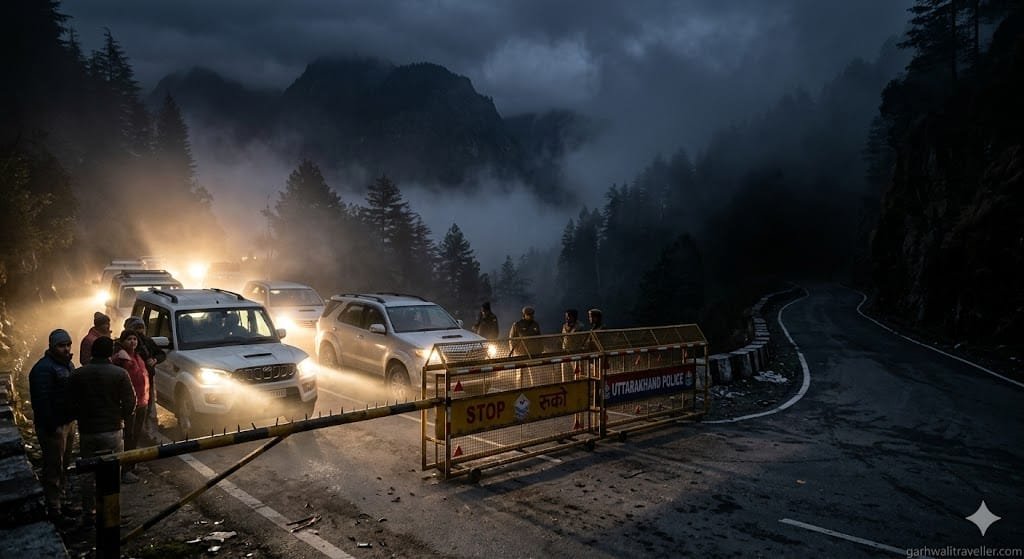
The Safety Mandate: Vehicles are now strictly prohibited from operating on Char Dham routes between 10:00 PM and 4:00 AM. While the government has aggressively expanded the “All-Weather Roads,” the surrounding topography remains highly volatile. Mountain highways are continuously susceptible to sudden rockfalls, and after sunset, high-altitude fog drops visibility to absolute zero. The night curfew was mandated to eliminate the severe accident spikes that occur when exhausted drivers try to push through unfamiliar hairpin bends in the dark.
Wonderslate+ 1
Who This Affects: There are zero exceptions to this rule. The 10 PM curfew applies to:
- Out-of-state private cars and SUVs.
- Self-drive rentals.
- Green Card-holding tourist buses and travelers.
- Local maxi-cabs and taxis.
The Penalty: Do not attempt to bypass the checkpoints via secondary village roads. If caught violating the curfew, the State Disaster Response Force (SDRF) and local police will impound the vehicle until morning, issue severe fines, and potentially cancel the commercial Yatra Green Card, permanently halting your pilgrimage.
The Barrier Reality: Where You Will Be Stopped
A common trap self-drive tourists fall into is believing they can negotiate with local police to “just drive 5 more kilometers” to reach their booked hotel. The 2026 reality is entirely different—the barriers are hard stops.
The Hard Stops: At exactly 10:00 PM, heavy steel barricades are physically dropped across the highways at major transit choke points. If you do not cross these barriers before 10 PM, you will be forced to park and halt in that town until 4:00 AM.
Namaste India Trip
Key barrier locations include:
- Kedarnath Route: The Sonprayag entry checkpoint and the Phata helipad barrier. (Note: The Sonprayag barrier queue for morning shuttles begins forming as early as 4:30 AM).
- Badrinath Route: The Joshimath and Pandukeshwar barriers.
- Yamunotri Route: The Barkot and Damta checkposts.
- Gangotri Route: The Hina checkpoint (approx. 26 km before Gangotri).
The Warning: Arguing with the SDRF or Transport Department officials is completely futile. The barricades are locked under direct orders from the Garhwal Commissioner to protect pilgrim lives. If your GPS indicates you will reach Sonprayag or Barkot at 9:45 PM, you must accept that any minor landslide or traffic jam will push you past the curfew. You must plan your travel window securely between 5:00 AM and sunset to avoid sleeping in your car.
Strategic Safe Halt Towns: Where to Sleep

When drivers realize they are going to miss the 10 PM curfew, panic often sets in. The worst—and most dangerous—decision you can make is pulling over to sleep in your parked car on a cliffside highway shoulder.
The Mistake of Sleeping in Your Car The Garhwal mountain temperatures drop rapidly after midnight, even in June. Sleeping in a vehicle carries severe risks: running the heater with the windows rolled up can lead to fatal carbon monoxide poisoning or oxygen depletion, while keeping the engine off risks hypothermia. Furthermore, highway shoulders are highly prone to sudden, unannounced rockfalls during the night. You must reach a designated transit town.
Hub Towns for Kedarnath & Badrinath Routes If you are driving the eastern circuit towards Kedarnath or Badrinath and realize you will not make the Sonprayag or Joshimath barriers by 10 PM, immediately start looking for accommodation in these high-density transit hubs:
- Srinagar Garhwal: The largest town in the region, offering wide, flat parking lots, numerous mechanics, and 24/7 roadside dhabas.
- Rudraprayag: The crucial junction where the Mandakini and Alaknanda rivers meet. It boasts excellent mid-range to premium hotels with proper, secure parking compounds.
- Guptkashi: If you are very close to Kedarnath but get delayed, Guptkashi is your final major safe haven before the Phata and Sonprayag traffic bottlenecks.
Hub Towns for Yamunotri & Gangotri Routes The western circuit is significantly more isolated, making it even more critical to plan your night halts.
- Barkot: This is the ultimate gateway basecamp for the Yamunotri trek. If you are delayed coming from Dehradun, do not push past Barkot. It offers a wide variety of accommodations from budget lodges to premium riverside resorts.
- Uttarkashi: The primary safe haven on the Gangotri route, featuring excellent medical facilities, large hotel properties, and safe municipal parking zones.
If you successfully manage your timing, clear the Sonprayag barrier, and make it to Gaurikund before the curfew, ensure you have booked one of these Zero-Stair Senior Friendly Hotels so you don’t have to navigate steep cliffside stairs in the dark.
The 5 AM Rule: How to Adjust Your Driving Itinerary
To survive the Char Dham circuit safely, you must completely rethink how you schedule your driving hours.
The Morning Rush: Because hundreds of vehicles are held at the barriers overnight, a massive traffic surge occurs at 4:00 AM when the barricades are finally lifted. If you are sleeping in a transit town and wake up at 7:00 AM, you will be stuck behind miles of commercial trucks and buses that started moving hours earlier.
The Golden Window: Self-drive tourists must start their engines by 5:00 AM daily. Driving between 5:00 AM and 1:00 PM is the ultimate “Golden Window.” This schedule allows you to cover your distance before the intense afternoon monsoon rains trigger landslides, and it completely insulates you from the 10 PM curfew anxiety.
Namaste India Trip
Buffer Days: Never trust Google Maps timings in the Himalayas. A GPS estimate of “4 hours” can easily turn into 9 hours. GPS algorithms do not account for mandatory biometric registration stops, Transport Department Green Card checks, one-way bridge bottlenecks, or waiting for a JCB to clear a minor landslide. Always add a minimum 30% time buffer to any digital route estimate.
Conclusion & Emergency Readiness
When driving in Uttarakhand, do not try to race the sunset. The mountains dictate the schedule, not your itinerary. Accept the 10 PM curfew as a life-saving mechanism, start your drives at dawn, and always have a backup hotel planned in a transit hub.
Namaste India Trip
If you are driving your own vehicle from out of state, the night curfew is just one rule you need to worry about. Make sure you also understand how to pass the mandatory Transport Department fitness test by reading our comprehensive guide on the Char Dham Yatra Green Card Rules 2026.