What is Singori? Uttarakhand’s Unique Cone-Shaped Sweet Wrapped in Malu Leaf
If you take a culinary tour through Uttarakhand, you will quickly notice that the state’s traditional sweets are as deeply connected to nature as its mountains. Among all Pahadi delicacies, none captures this harmony quite like Singori (also spelled Singodi).
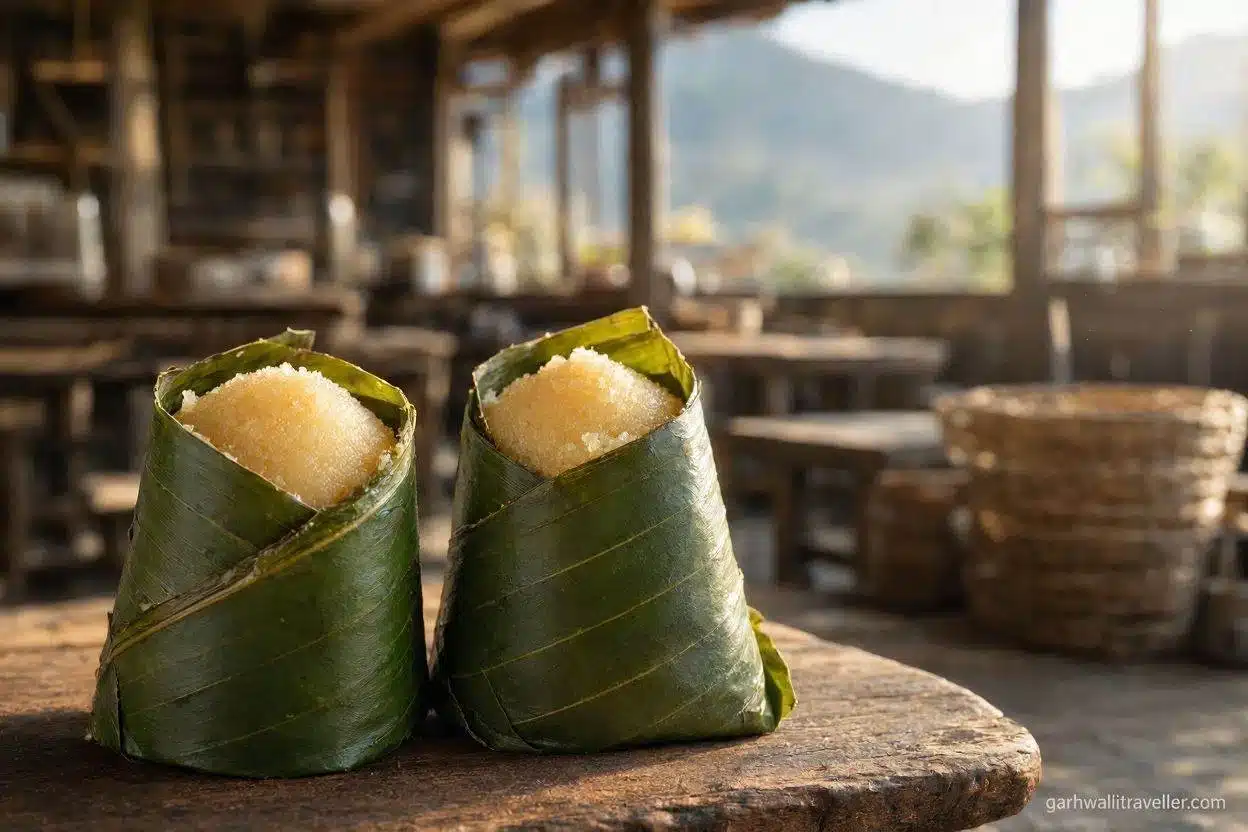
Served inside a freshly folded green leaf cone, Singori looks unlike any other dessert in India. But it isn’t just a gimmick—the leaf wrapper plays a vital role in giving this sweet its distinct aroma and flavor.
In this guide, we are exploring the origins of Singori, the special leaf used to wrap it, what it tastes like, and where you can try it authentic.
⚡ Quick Summary: What is Singori?
Singori is a traditional Pahadi sweet from Uttarakhand shaped like a small cone. It is made from condensed milk solids (khoya), sugar, and grated coconut, which is then tightly packed into a cone made from fresh Malu leaves (Bauhinia vahlii). The leaf imparts a subtle, fresh, woody aroma to the sweet.
What Leaf is Used for Singori? (The Malu Leaf Secret)
The most distinctive feature of Singori is its natural, biodegradable cone packaging.
The sweet is wrapped in the fresh leaf of the Malu plant (Bauhinia vahlii), a large climbing creeper abundant in the lower Himalayan foothills of Garhwal and Kumaon.
Why the Malu Leaf Matters:
- Natural Aroma: When the warm, moist khoya fudge is placed inside the fresh leaf, the heat releases subtle essential oils from the Malu leaf. This infuses the sweet with a pleasant, earthy, herbal fragrance.
- Moisture Lock: Unlike paper or plastic boxes, the natural leaf keeps the milk solids moist and soft without making them soggy.
- Eco-Friendly Legacy: Long before eco-friendly food packaging became a global trend, Pahadi halwais (confectioners) used Malu leaves as zero-waste, natural food containers.
The History & Origin of Singori
While Singori is widely popular in Almora (Kumaon) today, its origins trace back to the royal state of Old Tehri in the Garhwal region.
According to local folklore, confectioners in Old Tehri first created this recipe as a royal delicacy for the Garhwal monarchy. As trade routes flourished between Garhwal and Kumaon, the recipe migrated across the hills to Almora, where local confectioners refined the coconut-khoya proportion. Today, both Garhwal and Kumaon claim Singori as a proud piece of their heritage.
Ingredients & How Singori is Made
Unlike Bal Mithai, which is heavily roasted until dark brown, Singori retains a soft, creamy white or light golden color.
The Key Ingredients:
- Khoya (Mawa): Pure milk solids, simmered gently.
- Grated Coconut: Adds a delicate crunch and nutty richness.
- Cardamom Powder: For warmth and fragrance.
- Sugar: Kept mild so it doesn’t overpower the milk and leaf flavor.
- Fresh Malu Leaves: Formed into small cones pinned together with wooden toothpicks or broom splints.
The cooked mixture is filled into the leaf cones while warm and allowed to cool. As it sets, it takes the permanent shape of the cone.
Shelf Life & Storage (Important Travel Tip!)
Because Singori is wrapped in a fresh, moist leaf and contains a higher moisture content than Bal Mithai, its shelf life is shorter.
- Room Temperature: 3 to 5 days max (in cool hill climate).
- Warm Weather / Travel: 2 to 3 days.
Traveler’s Advice: If you are buying Singori as a gift to take home on a long flight or train ride, buy it on the last day of your trip. Keep it in a cool, ventilated container rather than an airtight plastic bag to prevent the leaf from fermenting.
Where to Buy Authentic Singori
- Almora (Kumaon): Just like Bal Mithai, the sweet shops in Lal Bazaar, Almora (such as Kheem Singh Mohan Singh Rautela) prepare fresh Singori daily using authentic Malu leaves.
- Tehri & Chamba (Garhwal): Local sweet vendors in Chamba and New Tehri offer traditional Garhwali-style Singori.
- Dehradun: If you are departing from the capital, you can pick up fresh Singori from top local vendors. See our curated list of the 7 Best Sweet Shops in Dehradun for convenient city locations.
Frequently Asked Questions (Singori FAQ)
Q: Do you eat the leaf on Singori?
A: No, you do not eat the leaf! You peel back the Malu leaf cone like an ice cream wrapper and enjoy the soft khoya sweet inside.
Q: What is the difference between Bal Mithai and Singori?
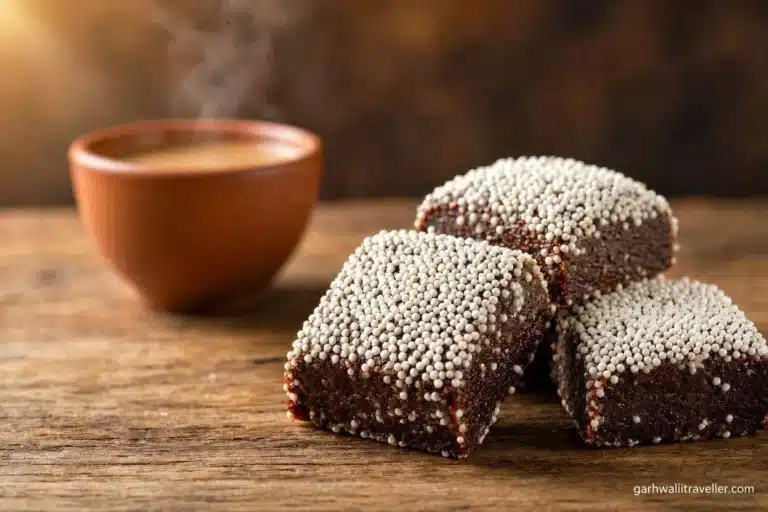
A: Bal Mithai is dark brown, highly roasted, firm, and coated in white sugar balls. Singori is soft, light-colored, mixed with grated coconut, and served inside a green Malu leaf cone.
Q: Can I make Singori without Malu leaves?
A: While you can make the khoya-coconut mixture at home, you will miss the distinct earthy aroma that the Malu leaf infuses into the sweet.