What is Bal Mithai? History, Ingredients & Where to Buy It
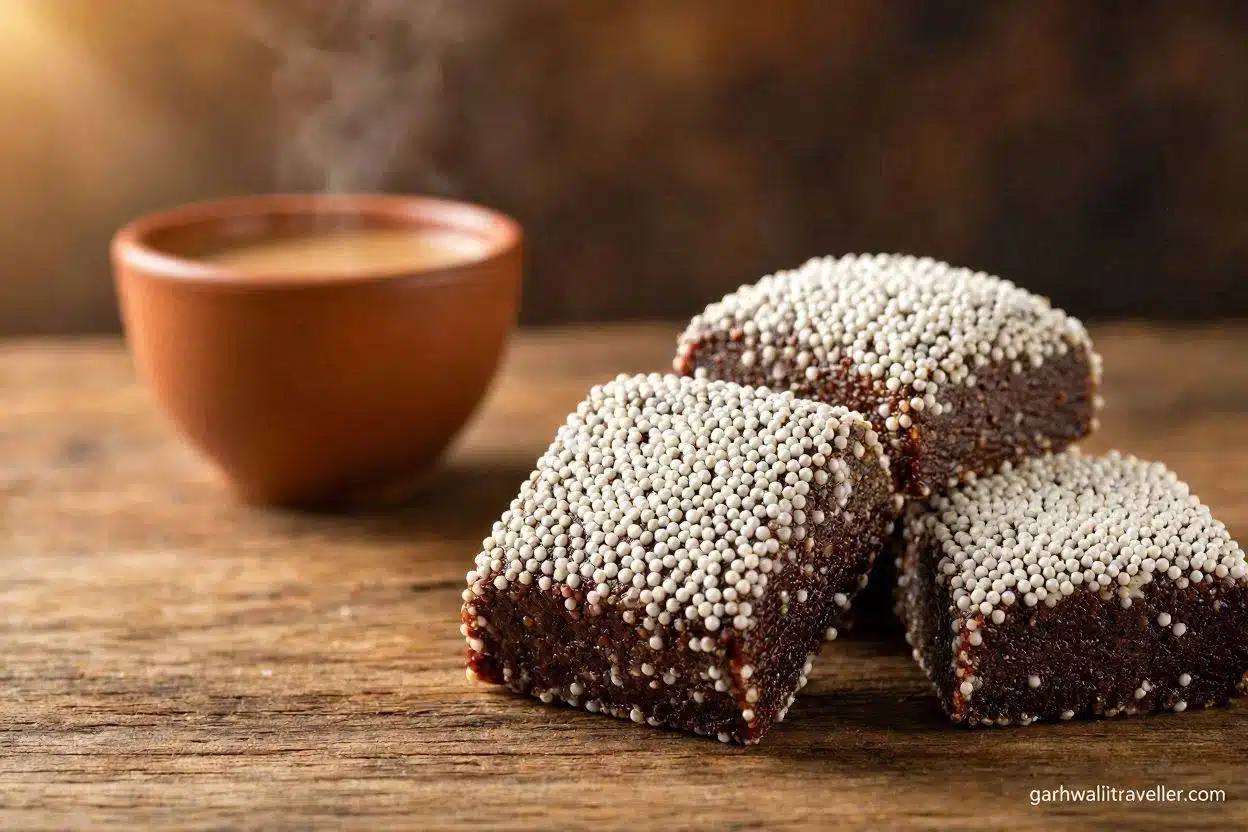
If you have ever visited the Kumaon hills of Uttarakhand or received a souvenir box from a friend returning from Nainital or Almora, you have likely encountered a dark brown, fudge-like sweet covered in tiny white balls.
This iconic dessert is Bal Mithai, the undisputed king of Pahadi sweets.
But what exactly are those crunchy white balls? Who invented this unique dessert? And how long does it last if you want to take it back home? In this deep-dive guide, we are uncovering the rich history, ingredients, and the absolute best places to buy authentic Bal Mithai.
⚡ Quick Guide: What is Bal Mithai?
Bal Mithai is a traditional, highly popular sweet from the Kumaon region of Uttarakhand, India. It is a dense, fudge-like dessert made by heavily roasting khoya (milk solids) with cane sugar until it caramelizes into a dark brown color. The roasted fudge is then cut into rectangles and coated with crunchy white sugar balls. It originated in the cultural town of Almora. Bal Mithai is one of the most famous sweets of Uttarakhand.
The Rich History of Bal Mithai: The Almora Connection
You cannot talk about Bal Mithai without talking about Almora, the cultural heart of the Kumaon region.
Bal Mithai was famously invented in Almora in the early 20th century. Local historians and food experts credit its creation to Lala Joga Ram Shah, a legendary local confectioner. He experimented with roasting pure milk solids over a slow wood fire for hours until the natural sugars caramelized, giving the sweet its signature dark color and slightly smoky, roasted flavor.
Historically, this sweet was offered to local deities, particularly to the Sun God, before it became a commercial favorite. Today, Almora remains the epicenter of Bal Mithai production, with heritage sweet shops passing the original recipe down through generations.
What Are the White Balls on Bal Mithai?
This is easily the most frequently asked question by tourists!
If you look closely at Bal Mithai, the dark brown fudge is entirely encased in tiny, crunchy white beads.
- The Traditional Method: Originally, these white balls were roasted white poppy seeds (known as khas khas). The poppy seeds provided a nutty texture that perfectly balanced the intensely sweet and rich khoya.
- The Modern Method: Today, almost all commercial sweet shops coat Bal Mithai in tiny, crunchy sugar balls (locally called dana, which look very similar to homeopathic pills). Sugar balls are used because they are more cost-effective, give a satisfying crunch, and significantly extend the visual appeal and shelf life of the sweet.
(Note: Some heritage shops in Almora will still make the poppy seed version on special pre-order!)
How is Bal Mithai Made? (The Ingredients)
The beauty of Bal Mithai lies in its simplicity. It only requires a few pure ingredients, but it demands immense patience and skill:
- Pure Khoya (Mawa): High-quality milk is boiled and reduced for hours until only the solid milk fats remain.
- Cane Sugar: The khoya is mixed with cane sugar and roasted continuously over a low flame.
- The Caramelization: This is the magic step. The continuous roasting caramelizes the sugar and milk fats, turning the mixture from pale white to a deep, rich chocolate brown.
- The Coating: The mixture is allowed to set, cut into rectangular blocks, and rolled generously in the white sugar dana.
Shelf Life & Why It’s the Perfect Travel Souvenir
If you are traveling to Uttarakhand, Bal Mithai is the ultimate souvenir to take back home to your friends and family.
Because the milk solids are roasted so thoroughly (removing most of the moisture), Bal Mithai has an exceptional shelf life of 10 to 15 days at room temperature.
- Travel Tip: You do not need to refrigerate it while traveling on long train journeys or flights. In fact, refrigeration can make it slightly hard. Just keep it in a cool, dry place, and it will retain its soft, fudgy texture.
Where to Buy the Best Authentic Bal Mithai
While you can find this sweet in almost every corner of Uttarakhand today, a few places stand out for their historic recipes and unmatched purity.
📍 In Almora (The Birthplace)
If you are passing through Almora, you must visit Kheem Singh Mohan Singh Rautela. This historic sweet shop is renowned across the state for preserving the authentic, centuries-old taste and texture of original Almora Bal Mithai.
📍 In Dehradun (For City Travelers)
Not traveling up to the Kumaon hills? Don’t worry! You can find incredibly fresh, travel-packed Bal Mithai right in the capital city. Check out our complete guide on the 7 Best Sweet Shops in Dehradun, where we highlight top-rated spots like Kalra Sweets, famous for their hygienic packaging and authentic Pahadi taste.
Frequently Asked Questions (Bal Mithai FAQ)
Q: Does Bal Mithai contain chocolate?
A: No! Despite its dark brown color and fudge-like texture, Bal Mithai contains absolutely no chocolate or cocoa. The rich color comes entirely from the slow caramelization of milk solids (khoya) and sugar.
Q: What is the difference between Bal Mithai and Chocolate Mithai?
A: In Uttarakhand, shops often sell a sweet called “Chocolate Mithai.” This is actually just the exact same roasted brown fudge used for Bal Mithai, but without the white sugar ball coating.
Q: Should I store Bal Mithai in the fridge?
A: It is best stored at room temperature in an airtight container, where it will last for 10-15 days. Refrigerating it will make the fudge very hard and difficult to bite into.