Traditional Garhwali Wedding Rituals at Triyuginarayan: Pahadi Dham, Dhol-Damau Rules & Local Etiquette
To truly honor the spiritual gravity of getting married at Triyuginarayan Temple—the legendary site where Lord Shiva and Goddess Parvati were united in the presence of Lord Vishnu and Lord Brahma—couples are increasingly choosing to step away from commercialized city weddings and embrace traditional Garhwali customs.
A wedding around the Akhand Dhuni (the eternal flame burning for three yugas) is not about flashy stage lighting or loud speakers; it is defined by sacred Vedic chants, pure Satvik feasts, and centuries-old Himalayan traditions.
If you are planning your wedding in this high-altitude mountain village, understanding local etiquette, traditional catering (Pahadi Dham), and musical guidelines is essential to prevent friction with temple authorities and create a seamless, authentic experience.
Temple Rules & Local Etiquette (What Is Allowed vs. Banned)
Triyuginarayan is an active, highly revered pilgrimage hub managed by the local Tirtha Purohit Samiti (hereditary temple priests). Standard city wedding behaviors are strictly regulated to maintain the spiritual purity of the shrine.
                    [ TRIYUGINARAYAN TEMPLE ETIQUETTE ]
                                     |
    +--------------------------------+--------------------------------+
    |                                                                 |
 [ STRICTLY PROHIBITED ]                                   [ STRONGLY ENCOURAGED ]
 • Alcohol & Non-Veg food (Village-wide)                   • Pure Satvik meals (No onion/garlic)
 • Electronic DJs & Loudspeakers                           • Traditional Dhol-Damau & Mangal Geet
 • Plastic decor & heavy metal arches                      • Fresh marigolds & brass oil lamps
 • Photography inside Garbhagriha                          • Courtyard photography
 • Unauthorized drone videography                           • Eco-friendly leaf plate (Pattal) dining
Pure Satvik Zone (Zero Alcohol & Non-Veg Policy)
The entire village of Triyuginarayan is a holy pilgrimage zone. Alcohol and non-vegetarian food are 100% prohibited across all guest houses, homestays, and open areas. Wedding catering is strictly Satvik, with many traditional families omitting onion and garlic from ceremonial meals.
Eco-Friendly Mandap Decor
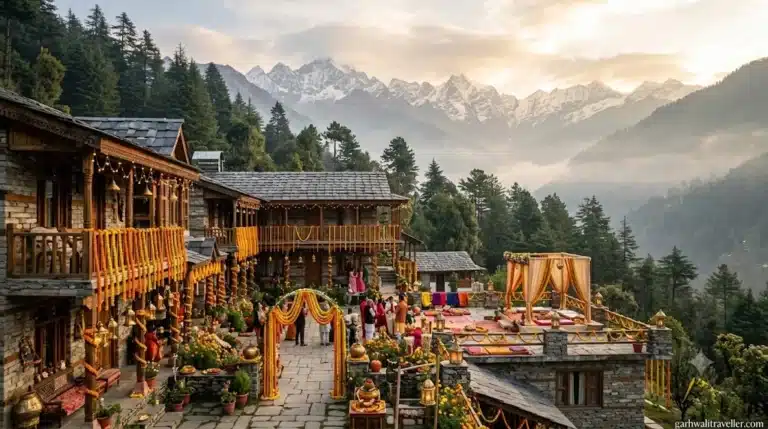
Heavy synthetic decorations, plastic arches, and metallic stage structures are banned near the ancient stone temple. Decor setups must remain eco-friendly, using fresh marigold flowers (Genda Phool), banana leaf arches, mango leaves, and brass oil lamps.
Photography & Drone Restrictions
- Garbhagriha (Inner Sanctum): Photography and flash video equipment are strictly forbidden inside the inner sanctum where the main idols reside.
- Temple Courtyard: Photography during the Saptapadi around the Akhand Dhuni in the outer courtyard is permitted.
- Drone Usage: Flying drones in and around Triyuginarayan is illegal without explicit written clearance from the District Magistrate (Rudraprayag) and the local Forest Department.
Music & Celebration Rules: The Dhol-Damau Mandate
You cannot bring DJ setups, boomboxes, or electronic sound systems into Triyuginarayan village. High-decibel electronic music is banned in the temple precinct to preserve peace.
Instead, celebrations rely on traditional Himalayan musical instruments:
The Sacred Dhol-Damau
In Garhwali culture, the Dhol (copper-bodied drum) and Damau (smaller bowl drum) are considered divine instruments played by specialized local folk artists called Das.
- Role: A troupe of 3 to 5 Dhol-Damau players leads the groom’s procession (Baraat) through the stone lanes of the village to the temple courtyard.
- Rhythms: Different rhythmic patterns (Taals) are played for specific moments—entering the village, welcoming the groom at the temple gate, during the garland exchange (Varmala), and during the bride’s departure (Vidaai).
Mangal Geet (Traditional Women’s Folk Songs)
During pre-wedding rituals like Haldi (turmeric paste application) and Mehendi, local Garhwali women gather to sing Mangal Geet. These auspicious, acoustic folk songs invoke the blessings of local deities (Ishta Devtas), Lord Shiva, Mata Parvati, and the Himalayan rivers for the couple’s long life.
The Authentic Wedding Feast: Pahadi Dham
Rather than serving standard, heavy city buffet menus, authentic mountain weddings feature a traditional Pahadi Dham. Historically served to guests sitting on floor mats using Pattals (dried leaf plates), this feast uses locally grown, nutrient-rich Himalayan grains and lentils.
                     [ TRADITIONAL PAHADI DHAM MENU ]
                                     |
   +-----------------+---------------+-----------------+
   |                 |               |                 |
[ MAINS ]        [ SIDES ]       [ CHUTNEY ]       [ SWEETS ]
• Chainsoo       • Aloo Gutke    • Bhang Chutney   • Jhangora Kheer
• Gahat Dal      • Linguda Subzi                   • Arsa & Roat
• Phaanu         • Kdda
Essential Dishes for a Triyuginarayan Dham:
- Chainsoo: A rich, savory dish made from roasted black gram (Urad Dal) ground into a coarse paste, slow-cooked in an iron Kadai (cauldron), and tempered with Jakhya (wild mountain mustard seeds).
- Gahat ki Dal / Phaanu: Made from horse gram (Gahat), a warming lentil renowned for its kidney-stone-clearing medicinal properties and comforting taste in cold high-altitude weather.
- Aloo ke Gutke: Parboiled mountain potatoes tossed in mustard oil, dried red chilies, and fried Jakhya.
- Bhang ki Chutney: A signature Garhwali condiment made by roasting hemp seeds (Bhang ke Beej) and grinding them with fresh mint, coriander, and sour hill-lemon juice (Galgal). It contains zero intoxicating properties and adds a nutty, citrus flavor.
- Jhangora ki Kheer: A velvety dessert pudding made from local barnyard millet (Jhangora), slow-boiled milk, cardamom, and mountain nuts.
- Arsa & Roat: Traditional rice-flour and jaggery (Gud) deep-fried delicacies. Arsa is customarily packed into sweet boxes and presented to guests during the Vidaai departure.
Sacred Rituals Around the Akhand Dhuni
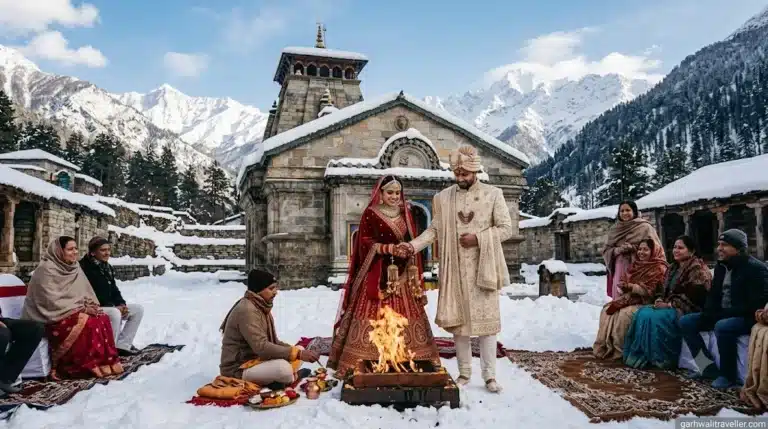
The peak moment of your wedding is the Saptapadi (seven steps/vows) taken around the Akhand Dhuni—the sacred fire pit inside the temple compound where Lord Shiva and Mata Parvati took their vows in the Satyuga.
Step-by-Step Formalities with the Tirtha Purohit Samiti:
- Pre-Booking: Contact the Tirtha Purohit Samiti 30 to 60 days before your date to ensure a dedicated ritual slot.
- Registration Fee: Pay the standard temple token registration fee (typically ₹1,100 to ₹5,000) at the official Samiti office counter to receive your ritual slip.
- Pooja Samagri: The officiating priest (Pandit Ji) supplies or directs you to local shops for authentic Havan Samagri, including cedar wood (Deodar), pure cow ghee, barley, sesame seeds, and fresh marigold garlands.
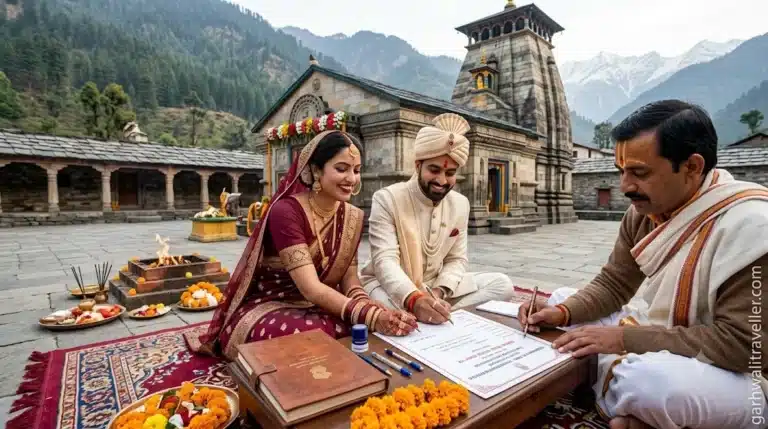
- Officiating Certificate: Upon completion of the Vedic rituals, the head priest issues a signed, stamped ceremonial receipt. Keep this certificate safe—you will need it to register your legal marriage certificate online.
Summary Checklist for Couples
- Booked local Dhol-Damau artists instead of electronic sound systems.
- Instructed caterer to prepare a 100% pure Satvik vegetarian menu (Pahadi Dham).
- Sourced eco-friendly marigold and banana-leaf decor setups.
- Informed guests about zero-alcohol and zero-non-veg village rules.
- Reserved ritual slot and obtained receipt from the Tirtha Purohit Samiti.
To calculate exact total expenses for this setup, explore our Triyuginarayan Wedding Package & Costs Guide. For guest accommodation details, check Where to Stay near Triyuginarayan. To convert your temple receipt into a legal government document, follow our Uttarakhand Marriage Registration Guide.