Planning a Winter Snow Wedding at Triyuginarayan Temple (Jan-Feb Logistics & 4×4 Transport)
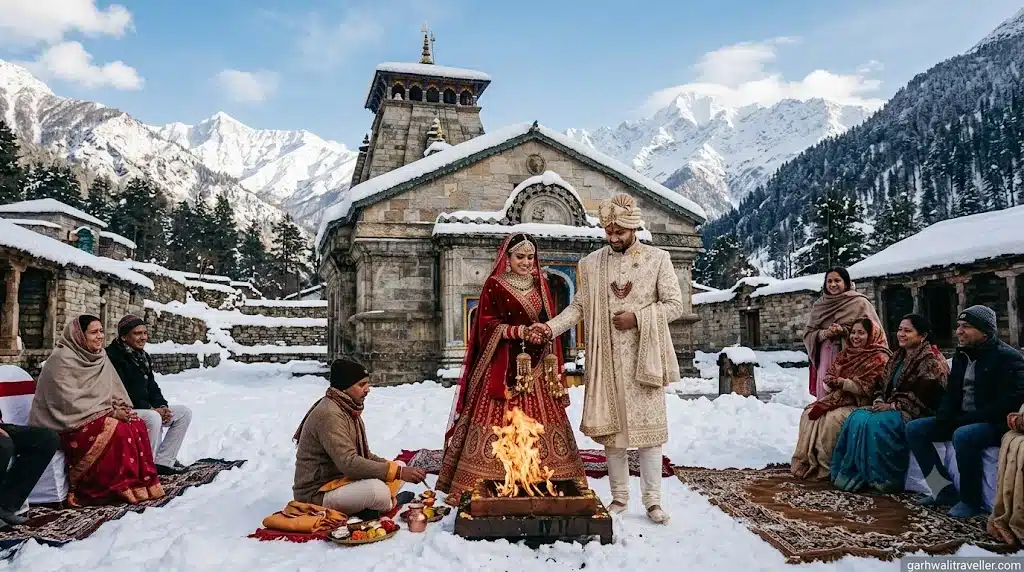
Getting married against the backdrop of snow-dusted Himalayan peaks at Triyuginarayan Temple is a cinematic dream for many couples. However, executing a winter wedding between December and February requires rigorous preparation and flexibility. At an elevation of 1,980 meters, extreme cold and heavy snowfall can make mountain logistics highly challenging, sometimes leading to road blockades.
If you are determined to take your vows around the Akhand Dhuni surrounded by snow, this guide breaks down the exact weather realities, 4×4 transport mandates, survival clothing tips, and off-season budget expectations.
Quick Winter Wedding Answers
Can we get married at Triyuginarayan Temple in January or February?
Yes, winter weddings are possible and offer beautiful snow-dusted scenery with zero pilgrim crowds. However, sub-zero temperatures and heavy snowfall can cause temporary road closures. Couples must plan for flexible itineraries, strictly use 4×4 local transport, and arrange accommodations with heavy-duty heating.
Is the temple open during heavy snow?
The temple remains open year-round, but access from the Sonprayag base camp can be temporarily cut off if overnight snowfall blocks the 10 km uphill road. Local authorities usually clear the paths, but a 1-day buffer in your schedule is mandatory.
How do guests travel to the temple in winter?
Standard tempo travellers, buses, and low-clearance sedans cannot navigate the icy roads. Guests must park at Sonprayag or Sitapur and hire local 4×4 Mahindra Boleros or Scorpios equipped with snow chains to shuttle up to the village.
Weather Realities: What to Expect (Dec to Feb)
Winter in the Rudraprayag district is not for the faint of heart. The climate dictates every aspect of your wedding timeline.
- Sub-Zero Nights: Temperatures frequently drop below freezing (0°C to -5°C) overnight.
- Daytime Conditions: During clear days, temperatures hover between 5°C to 10°C. If the sun is out, morning photography is incredibly crisp and comfortable.
- The Privacy Advantage: The massive summer Char Dham Yatra crowds are completely gone. You will experience absolute privacy and an intimate ceremony without rushing.
The 4×4 Transport Mandate
Transportation is the single highest failure point for winter weddings in the Himalayas. Do not attempt to drive luxury sedans or standard coaches up to the village.
- The Base Camp Strategy: Treat Sonprayag or Sitapur as your logistical base camp. Park all out-of-state guest vehicles here.
- Hire Local Snow Drivers: Work with the local transport union in Sonprayag to hire 4×4 vehicles. Local drivers understand how to navigate black ice and slush on the hairpin bends leading to Triyuginarayan.
- Daytime Travel Only: Never attempt to drive up or down the mountain road after sunset during the winter months due to zero visibility and rapidly freezing roads.
Winter Wedding Attire & Survival Gear
Silk sarees, thin kurtas, and open-toed heels will result in severe discomfort. You must merge traditional bridal aesthetics with extreme weather survival gear.
- Concealed Thermals: Both the bride and groom must wear high-quality thermal innerwear (fleece-lined) beneath their wedding outfits.
- Footwear for the Courtyard: The ancient stone floors of the temple courtyard are freezing. Ditch the heels for insulated, slip-resistant boots. Wear thick woolen socks for the Saptapadi (the seven pheras around the sacred fire).
- Bridal Outerwear: Incorporate traditional Garhwali woolen shawls, heavy velvet capes, or pashminas into the bridal look. They look stunning in photos and provide critical warmth.
- Guest Care Kits: Provide your guests with winter survival kits upon arrival, including hand warmers, woolen gloves, and lip balm.
Accommodation & Heating Logistics
Finding accommodation that can reliably handle sub-zero temperatures is your biggest hurdle.
- Verify Power & Heating: Not all village homestays have central heating or 24/7 power backup. Before booking, confirm that the property provides electric oil radiators or heavy-duty blowers.
- Hot Water Systems: Because pipes can freeze overnight, ensure the property has traditional wood-fired water heaters (Hamams) to guarantee bucket hot water for morning baths before the ceremony.
- Stay in the Valley: It is highly recommended to host your guests in lower-altitude valley resorts in Phata, Sersi, or Sonprayag, where temperatures are slightly milder, and only travel up to Triyuginarayan village on the morning of the wedding.
Cost Variations: Off-Season Discounts vs. Snow Premiums
While a winter wedding avoids the massive price gouging of the May-June Yatra peak, your budget shifts toward survival logistics.
- Accommodation Savings: Hotel room rates drop significantly. A room that costs ₹5,000 in summer may be available for ₹2,000 to ₹2,500 in January.
- Premium Expenses: You will pay a premium for specialized snow transport, heavy room heating, and winter catering (arranging continuous bonfires, hot soups, and endless tea for your guests).
This snow logistics guide is part of our complete destination wedding series. To compare these costs against summer weddings, read our main Triyuginarayan Temple Wedding Exact Cost Breakdown. To find the best valley resorts equipped for winter, explore our Where to Stay Guide.