Karnaprayag Sangam: Confluence of Alaknanda & Pindar Rivers
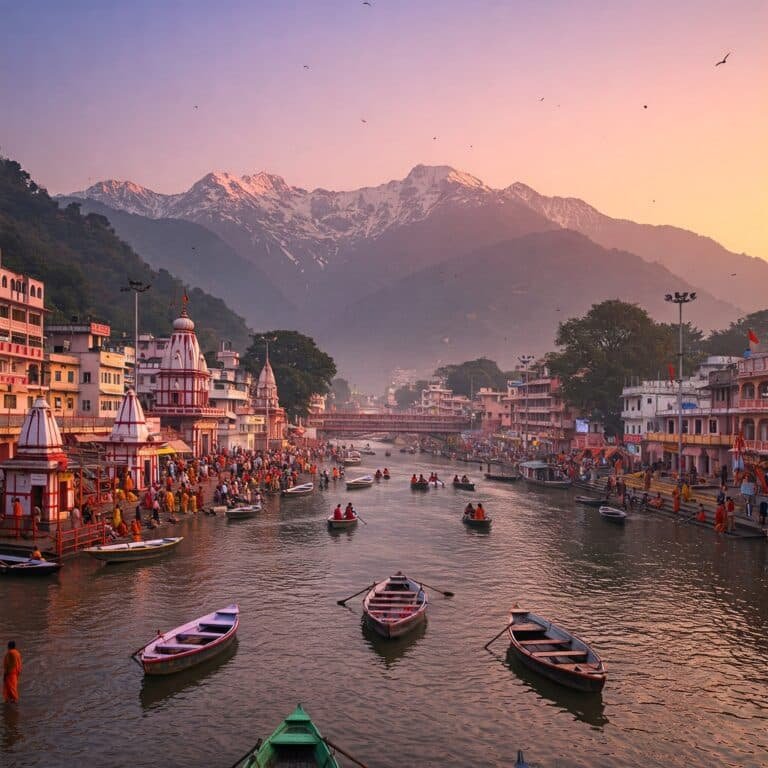
Karnaprayag Sangam is one of the most spiritually vibrant and visually stunning confluences in Uttarakhand. As the third of the revered Panch Prayags (five confluences), it marks the exact point where the crystal-clear, turquoise waters of the Pindar River merge into the roaring Alaknanda River. Situated at an elevation of 860 meters in the Chamoli district, Karnaprayag is the third of the sacred Panch Prayags. It is the holy confluence where the Alaknanda River, flowing from Badrinath, meets the Pindar River, which originates from the icy Pindari Glacier in Kumaon.
Whether you are pausing here during your Char Dham Yatra to Badrinath or Kedarnath, or seeking an offbeat spiritual retreat, Karnaprayag offers a profound mix of ancient Mahabharata legends, rare historical footnotes, and breathtaking Himalayan beauty.
The Legend of the Warrior Karna
The town derives its name and spiritual identity from Karna, the tragic hero of the Mahabharata.
- The Penance: It is believed that Karna meditated here for years to please the Sun God (Surya). Pleased by his devotion, Surya gifted him the Kavach (impenetrable armor) and Kundal (earrings) that made him invincible.
- The Final Rites: Local lore suggests that after the Great War, Lord Krishna himself performed the last rites of Karna at this very confluence.
Key Attractions at the Sangam
- Karna Temple: This is one of the few temples in India dedicated specifically to Anga-Raja Karna.
- Uma Devi Temple: An ancient shrine dedicated to Goddess Parvati (Uma). It is believed that the temple was renovated by the great philosopher Adi Shankaracharya.
- Swami Vivekananda’s Meditation Spot: History buffs will appreciate knowing that Swami Vivekananda meditated at Karnaprayag for 18 days with his gurus, seeking spiritual clarity.
Karnaprayag At a Glance
| Feature | Details |
| Location | Chamoli District, Uttarakhand |
| Altitude | 1,451 meters (4,760 feet) |
| Meeting Rivers | Alaknanda River & Pindar River |
| Best Time to Visit | April to June, and September to November |
| Nearest Airport | Jolly Grant Airport, Dehradun (185 km) |
The Spiritual & Historical Significance
While most travel guides mention Karnaprayag’s connection to the Mahabharata, the site holds far deeper secrets for those willing to look closer.
The Legend of Karna and the Dimri Priests
The town is named after the tragic hero of the Mahabharata, Karna. It is believed that Karna stood on a specific stone here, meditating on the Sun God (Surya) to acquire his invincible armor (Kavach and Kundal). Today, the ancient Uma Devi Temple and Karna Temple stand near the confluence. The daily rituals and maintenance of these sacred spaces are traditionally overseen by the local Dimri priests, who have been the custodians of this region’s spiritual heritage for centuries.
The Disappearing Karna Shila
At the exact meeting point of the rivers lies the Karna Shila—the very stone Karna is said to have meditated upon. Traveler Note: If you visit during the peak monsoon months of July and August, the Karna Shila often gets completely submerged by the swelling, furious waters of the Alaknanda and Pindar.
Swami Vivekananda’s Historic Visit
Beyond ancient mythology, Karnaprayag holds a special place in modern spiritual history. During his wandering days in the Himalayas, the great philosopher Swami Vivekananda meditated here with his brother monks, finding deep solace in the energetic vibrations of the Sangam before continuing his journey deeper into the Garhwal Himalayas.
How to Reach Karnaprayag
Karnaprayag is highly accessible as it sits right on the main highway connecting the plains to the high Himalayas.
- By Road: The town is well-connected by NH-7. You can easily find daily buses and shared taxis from Haridwar (215 km) and Rishikesh (190 km). The drive takes about 6 to 7 hours.
- By Train: Currently, the nearest railway station is Rishikesh. However, this is changing soon. (CMS Tip: Add an internal link here to your “Rishikesh-Karnaprayag Railway Line Status” article). Once the new railway project is complete, travel time from Rishikesh will be drastically reduced.
- By Air: The closest airport is Jolly Grant in Dehradun, approximately 185 km away. Taxis are available directly from the airport to Karnaprayag.
Distance Chart: Exploring the Garhwal Himalayas
Understanding distances from Karnaprayag is crucial for planning your Himalayan itinerary.
| Destination | Distance from Karnaprayag | Estimated Travel Time |
| Rudraprayag | 33 km | 1 Hour |
| Nandaprayag | 22 km | 45 Minutes |
| Chopta | ~50 km | 2 Hours |
| Joshimath | 80 km | 3 Hours |
| Kedarnath (Gaurikund) | 105 km | 4 – 5 Hours (Plus Trek) |
| Badrinath | 119 km | 4.5 – 5 Hours |
Context: The Panch Prayags from upstream to downstream are Vishnuprayag, Nandaprayag, Karnaprayag, Rudraprayag, and Devprayag.
Pro Tips for Visiting Karnaprayag Sangam
1. The Sangam Parking Hack
The narrow roads leading directly down to the Sangam and the main temple can become incredibly congested, especially during the Yatra season.
- Do not try to drive your vehicle all the way down to the temple steps.
- Instead, park your car near the petrol pump on the Badrinath Highway.
- From there, it is a pleasant, hassle-free 500-meter walk down to the ghats.
2. Evening Aarti Timings
Witnessing the evening Aarti at the Sangam is a mesmerizing experience. The rhythmic chanting echoing against the river valley is unforgettable.
- Summer Aarti Timing: Starts around 7:00 PM
- Winter Aarti Timing: Starts around 6:00 PM(Arrive 15 minutes early to secure a peaceful spot on the steps).
3. Photography & Perspectives
The distinct color difference between the rivers is most visible on clear, sunny days. For aerial shots, the contrast of the blue-green Pindar crashing into the muddy Alaknanda looks incredible from above. If you’re putting your DJI Mini 3 Pro up for some travel vlog footage, keep a close eye on the sudden wind gusts that funnel through the river valley, and always maintain a respectful distance from the temple spires.
Where to Stay and Eat
Accommodation: You don’t need to break the bank to stay here. The GMVN Guest House offers reliable, clean, and budget-friendly rooms with excellent views of the valley. There are also numerous local homestays and private lodges near the main market.
Food: Skip the generic fast food and try authentic Garhwali cuisine at the local roadside dhabas. Ask for Mandua ki Roti (finger millet flatbread), Chainsoo (black gram dal), and Aloo ke Gutke (spiced local potatoes) accompanied by fresh mint chutney.
Frequently Asked Questions (FAQs)
Which rivers meet at Karnaprayag Sangam?
The Alaknanda River and the Pindar River meet at Karnaprayag Sangam. The Pindar River originates from the Pindari Glacier, while the Alaknanda flows down from the Satopanth Glacier.
Where is the Karna Shila located?
The Karna Shila is located exactly at the confluence of the two rivers in Karnaprayag. It is the sacred stone where the warrior Karna is believed to have meditated, though it often gets submerged during the heavy monsoon season.
Did Swami Vivekananda visit Karnaprayag?
Yes, Swami Vivekananda visited Karnaprayag and meditated at the Sangam. He spent time absorbing the spiritual energy of the confluence during his wandering journey through the Garhwal Himalayas.
Is Karnaprayag part of the Char Dham Yatra?
While not a primary destination of the Char Dham itself, Karnaprayag is a crucial transit town and a highly revered spiritual stop on the route to both Badrinath and Kedarnath.